

Landlord Insurance – Which Coverage Do You Actually Need
·5 min read
Many landlords assume the policy they had while living in the apartment themselves keeps covering them after it's rented out. That's a common and expensive mistake: many home insurance policies explicitly distinguish between "owner-occupied residence" and "rented property," and a claim filed on a rented property under a policy that was never updated can be rejected outright.
Structure vs. Contents — Who Insures What
Structure insurance covers the physical shell of the apartment — walls, plumbing, wiring, fixed installations. This is always the landlord's responsibility, even while a tenant lives there. Don't rely on the tenant to insure the structure; it's not their responsibility, and in most cases not even legally possible for them.
Contents insurance covers furniture and belongings inside the apartment. If the apartment is rented furnished, it's worth insuring your contents separately. If the tenant brings their own furniture, insuring it is their responsibility, and it's worth stating that explicitly in the lease.
Third-Party Liability Coverage — Why It's Critical
Third-party liability insurance covers damage your property causes to someone else's property or person, for example, a leak that drips down into the neighbor's apartment below. This is one of the most important coverages for a landlord, because you're not on-site to catch a developing problem in real time. See also our guide to maintenance responsibility — quick documentation and response to faults also minimizes your insurance risk, since a delayed response to a known leak can complicate a liability claim later.
Loss-of-Rent Coverage
A less well-known but useful coverage: if the property becomes uninhabitable due to covered damage (like a fire or major water damage), a policy with "loss of rent" coverage compensates you for the income you lost during repairs, not just the cost of the repair itself. For a landlord relying on that monthly rent to cover a mortgage payment, this coverage can matter more than the repair cost itself.
What About the Tenant's Contents Insurance?
State it clearly in the lease: insuring the tenant's personal belongings is their own responsibility, not yours. Your structure policy won't compensate the tenant if their laptop is stolen or damaged. A clear clause on this prevents mistaken expectations, see our complete guide to lease contract clauses.

What a Typical Landlord Policy Actually Covers
Most landlord-specific policies bundle several types of protection into one annual premium. Understanding what's typically included, and what usually needs to be added separately, helps you avoid both gaps and paying for coverage you don't need:
- Fire and basic perils — covers the structure against fire, smoke damage, and similar events; this is the baseline every policy includes
- Water damage — covers burst pipes and similar plumbing failures; check whether gradual leaks (as opposed to a sudden burst) are covered, since some policies exclude slow-developing damage
- Third-party liability — as above, often available as an add-on rather than a default inclusion
- Loss of rent — usually an optional rider, not a default inclusion
- Natural disaster coverage — earthquake coverage in particular is frequently excluded by default and needs to be added explicitly
A Concrete Scenario
A landlord owns an apartment insured under a standard homeowner policy taken out years earlier, before it was ever rented. A tenant moves in, and eight months later a washing machine hose fails overnight, flooding the kitchen and damaging the unit below. The landlord files a claim, only to discover the policy was never updated to reflect rental status, and the insurer denies the claim on the basis that the property's use changed without notification. The repair bill for both apartments comes to roughly ₪14,000, entirely out of pocket. A single phone call to the insurer at the start of the tenancy, updating the property's status and adding third-party liability coverage, would have cost a modest increase in the annual premium and avoided the entire loss.
When to Update Your Policy
- Immediately, the first time you rent out a property — update the property's status with your insurer
- At every tenant renewal — make sure the policy still reflects reality (for example, if you switched from a standard lease to short-term tourist rental, see the special risks in our short-term rental guide)
- After a major renovation — the value of the property and contents may have changed
Questions Worth Asking Your Insurer
- Does the policy explicitly cover the property as a rented, tenant-occupied residence?
- Is third-party liability included, or does it need to be added as a rider?
- Is loss-of-rent coverage available, and what's the waiting period before it kicks in?
- Are gradual leaks covered, or only sudden bursts?
- Does the policy change if the property is rented short-term rather than under a standard lease?
Frequently Asked Questions
Does my mortgage insurance already cover this? Mortgage-linked insurance typically covers the structure against total loss for the bank's benefit, but it often doesn't include third-party liability, loss of rent, or the broader coverage a dedicated landlord policy provides. Check the specific terms rather than assuming.
Is landlord insurance more expensive than a standard homeowner policy? Usually only modestly more, since the added risk (liability, loss of rent) is priced in, but the price difference is generally small next to the cost of an uncovered claim.
What happens if I forget to update the policy and never file a claim? Nothing happens until you actually need it. The risk is invisible right up until a claim gets denied, which is exactly why this is one of the most commonly overlooked landlord tasks.
Putting It Into Practice
Insurance that isn't reviewed is a line item most landlords "forget" until damage happens. Updating a policy for a rented property takes one phone call, and could save tens of thousands of shekels if something genuinely goes wrong.
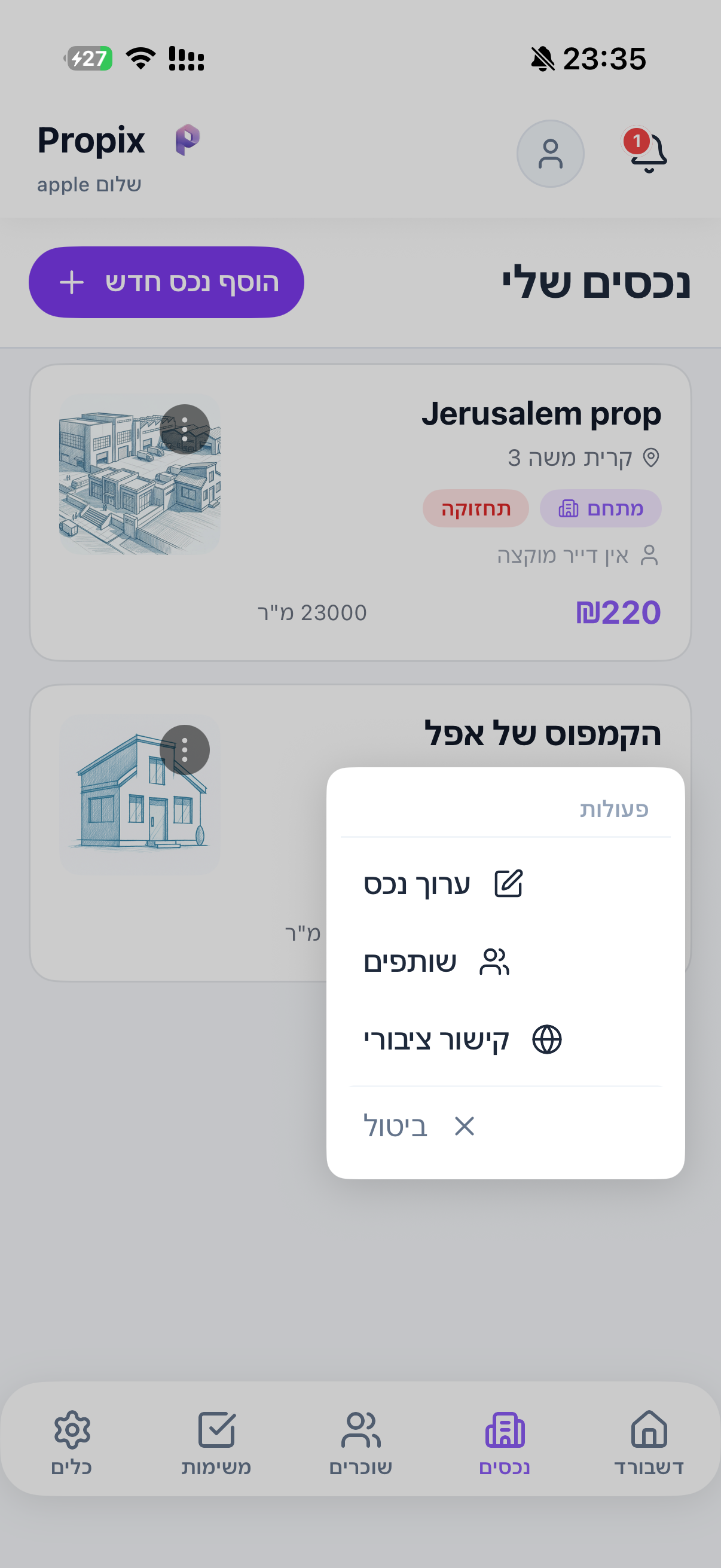
Propix lets you keep your policy details, renewal date, and insurer contact in the property file, so the information is available exactly when you actually need it.