
Property Maintenance – Who's Responsible for Fixing What? Landlord or Tenant?
·6 min read
The question everyone asks
"The water heater broke — who pays?" — this is one of the most common questions landlords and tenants alike run into. The answer depends on a combination of three factors: the law, the lease, and the circumstances of the damage. Understanding all three will save you arguments, money, and damaged relationships.
A clear definition of maintenance responsibility must be written into the lease. A lease that doesn't define this opens the door to uncomfortable interpretations. For details on what to include in a lease, see our 10 essential lease clauses.
What does the law generally say?
Under standard landlord-tenant law, basic responsibility is divided as follows:
The landlord is responsible for:
- Construction defects and structural issues that existed at handover
- Damage that existed before the tenant moved in
- Reasonable, normal wear and tear — like doors, windows, plumbing worn down over time
- Infrastructure systems: main plumbing, main electrical, roof
The tenant is responsible for:
- Damage caused by them or their guests (intentionally or through negligence)
- Lack of routine upkeep that led to damage (for example, not cleaning filters and the AC unit breaking down)
- Misuse of fixtures and systems
The practical rule: "reasonable wear vs. damage"
In most cases, here's the simple way to distinguish:
| Situation | Responsible party | |-----------|-------------------| | The water heater reached the end of its life after 12 years | Landlord | | The tenant damaged and broke the water heater | Tenant | | A faucet drips because it's old | Landlord | | The tenant forcibly broke the faucet | Tenant | | A wall cracked due to structural moisture | Landlord | | A wall was damaged by drilling in a shelf | Tenant |
Gray areas — the tricky situations
An air conditioner that stopped working
An 8-year-old AC unit that simply stopped working — usually the landlord's responsibility. But if the tenant never cleaned the filters for years as recommended, and that's what caused the unit to fail early — it gets more complicated, and the tenant may bear part of the responsibility.
The practical takeaway: write into the lease that cleaning AC filters every six months is the tenant's duty. That removes the ambiguity.
A blocked drain
A blockage in the main pipe — landlord. A localized blockage (say, in the toilet) with evidence of inappropriate objects being flushed — tenant. An experienced plumber can usually say with reasonable confidence what caused the blockage.
Mold on the walls
One of the trickiest topics:
- Structural moisture (from the roof, exterior cladding, a structural issue) → landlord
- Poor ventilation (tenant not opening windows, not airing out after showers) → tenant
Tip: in the move-in protocol, photograph all the walls and note any existing dampness. This protects you both ways.
An appliance provided by the landlord
If the landlord included an appliance (dishwasher, washing machine) as part of a furnished property, and that appliance breaks — the landlord is responsible for repair or replacement, unless the damage was caused by misuse.
How do you prevent arguments?
1. Write a clear threshold amount into the lease
A definition that works well in practice: "Repairs costing up to ₪500 will be carried out and funded by the tenant. Repairs costing more than ₪500 will be reported to the landlord before any work begins, who will decide how to proceed."
This simplifies a lot of small disputes and prevents a situation where the tenant "solves it themselves" and then submits a bill.
2. Do a detailed move-in protocol
Photograph everything on move-in day — the condition of the water heater, the AC, the walls, the floor, the doors, the faucets. Number and record it all in a document you sign together with the tenant. For a full guide on what must be included in a protocol and how to build one properly, see the apartment handover protocol – the complete guide.
This is your best insurance: a tenant who signed a move-in protocol can't later claim the damage was there before.
3. Respond to faults quickly
A landlord who responds quickly to faults:
- Maintains a good relationship with the tenant
- Prevents bigger damage stemming from neglect (a small drip that turns into major damage)
- Builds a reputation that helps attract better tenants going forward
A tenant who reports a fault and gets a response within 24–48 hours is a tenant who'll take better care of your property.
4. Build a network of tradespeople
A plumber, electrician, carpenter, and locksmith you trust and who know your properties — they save you time, money, and stress. When a fault comes up, you're not panic-searching on Google, you're calling your contact.
It's also worth confirming in advance: is major damage (a leak that harmed a neighbor, a fire) covered by your insurance policy? Not every policy covers a rented property by default — see our guide to landlord insurance.
5. Do preventive maintenance checks
Once a year, visit the property (coordinated with the tenant) and check:
- The electrical system's condition (panel, outlets)
- The plumbing's condition (faucets, drainage slope)
- The roof/sealing condition (important before winter)
- The AC's condition
- The water heater's condition
A short annual inspection can save you an expensive repair that could have been prevented.
What not to do as a landlord
Don't argue in the heat of the moment: when there's an urgent fault (flooded flooring, burnt-out wiring), it's not the time for a debate about responsibility. Fix the problem first, discuss who pays later.
Don't refuse to fix something and then complain about the damage: a tenant who reported a dripping faucet and the landlord didn't act — and now there's floor damage — a court will ask: why didn't you handle it immediately?
Don't enter the property without coordinating: even as the landlord, entering without the tenant's consent (except in an emergency) is a privacy violation. Always coordinate 24–48 hours in advance.
When there's an unresolved dispute
If you're in a prolonged argument with a tenant over who's responsible for payment, and haven't found a solution through direct conversation:
- Send your position in writing
- Consider mediation — a neutral party who can help reach agreement
- If the tenant deducted an amount from the deposit that you don't agree with — go to court
For details on what to do when a dispute reaches the stage of stopped payments, see tenant not paying rent – what to do.
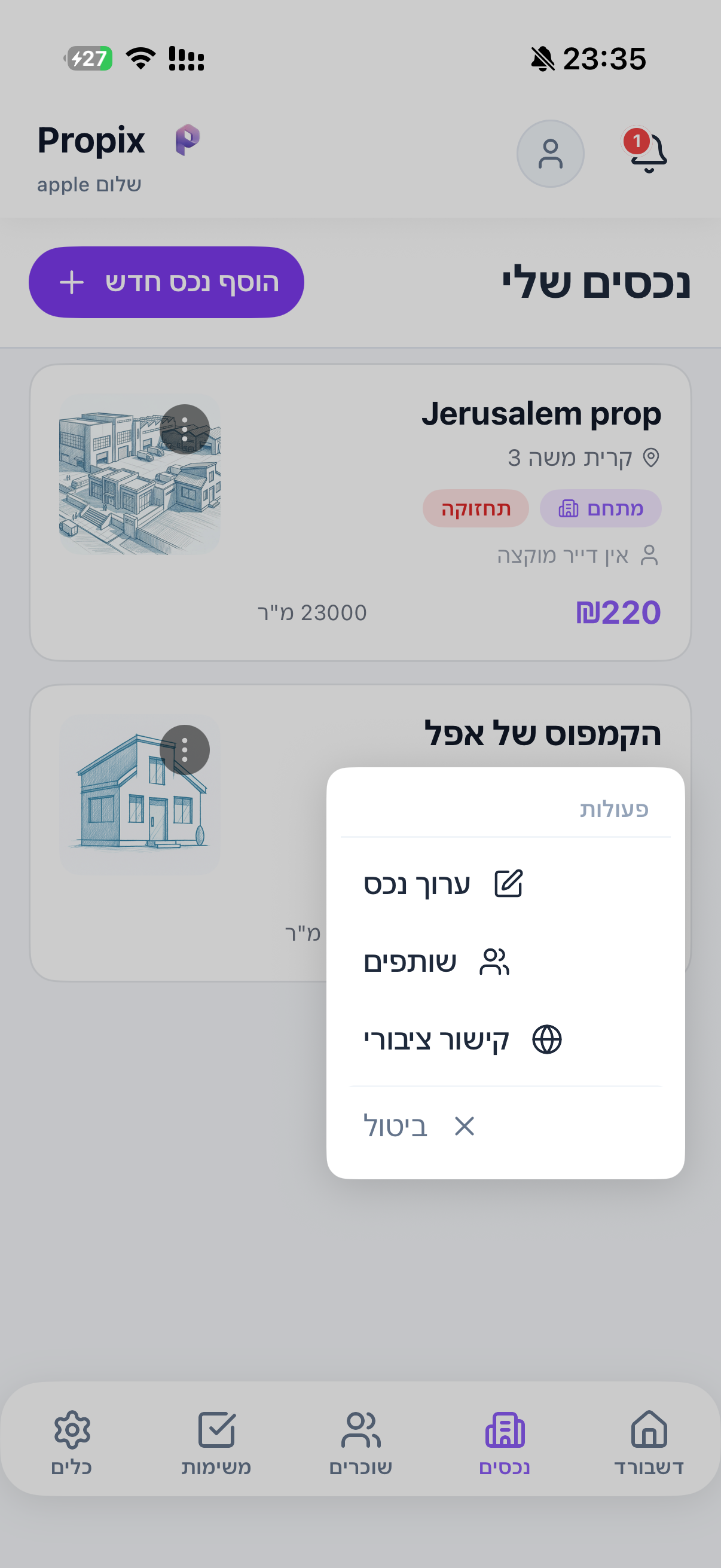
Propix lets you document every fault in real time, track how repairs are handled, and store everything in the property's digital file — so you're never left with "he said, she said" if a dispute arises.