

Israel's Fair Rental Law 2026 – The New Regulations Every Landlord Must Know
·5 min read
Israel's Fair Rental Law was first enacted in 2017, setting binding minimum standards for residential leases: livability conditions, limits on security deposits, and repair obligations placed on landlords. Many property owners still don't know the details — and that's exactly where the risk lies: a violation doesn't depend on intent, only on facts.
In February 2026, the Ministry of Justice published draft regulations for public comment — the "Rental and Loan Regulations (Residential Lease Agreement), 5786-2026." While the original law only set general headlines, the new regulations get into everyday specifics, and significantly expand what's required of landlords.
Six Minimum Conditions Every Apartment Must Meet
Under the law, an apartment that fails even one of the following conditions puts the landlord in breach of contract, even if nothing was written about it explicitly:
- Functioning water and electricity supply
- Reasonable sealing against water infiltration and dampness
- Functioning, lockable doors and windows
- Working sanitation (toilets, sewage)
- Basic structural safety
- Heating capability or infrastructure for heating (depending on region)
If an apartment doesn't meet one of these on the day it's handed over, document and fix it before the tenant moves in. The apartment handover protocol is the main tool for proving the apartment met these conditions on move-in day, and it's the same document you'll rely on later if a dispute over the property's condition ever comes up.
Security Deposits: What's Allowed and What Isn't
This is the clause most landlords get wrong without realizing it. The combined total of all security instruments (deposit, guarantee, promissory note) is capped at one-third of the total rent for the lease period, or three months' rent, whichever is lower. Even if you combine several types of security together, the cumulative amount can't exceed this cap. For a full breakdown of security types and how to collect them correctly, see our guide to rental security deposits and guarantees.
Example: rent of ₪6,000/month for a year totals ₪72,000 for the term. A third of that is ₪24,000, but three months' rent is only ₪18,000. Here the legal cap is ₪18,000, the lower figure.
Repair Timelines — the Clause Easiest to Violate by Accident
Under the law, a landlord must repair:
- An urgent fault (like a water leak or faulty wiring) within 3 days of receiving notice
- A regular fault within 30 days
"Receiving notice" doesn't have to be formal. A WhatsApp message from the tenant with a photo of the leak counts. A landlord who doesn't respond within that window is exposed to a claim, even if the fault gets fixed eventually. Full detail on how maintenance responsibility is divided is in our property maintenance guide.
Rent Increases — Clearing Up a Common Myth
A figure circulates constantly among landlords: a renewal increase capped at 5%, or the Consumer Price Index, whichever is lower. For an ordinary private landlord, that cap doesn't exist. The law only fixes the rent for the term of the signed lease — once that term ends, renewal is a fresh negotiation, and you can propose whatever figure a tenant is willing to sign. The 5%/CPI ceiling that gets quoted so often applies to a narrow, separate track: apartments let under government long-term institutional rental programs, run by large companies holding many units under a specific designated agreement, not to a private owner renting out one or a few apartments. If that program applies to you, check its terms directly rather than assuming the general rule covers it. For everyone else, see our rent increase guide for how to set a renewal number that's defensible and keeps a good tenant, without a legal ceiling to lean on.
What's Actually Changing in the New Regulations
Key points from the 2026 draft:
- Mandatory full disclosure in the lease — a list of known defects, meter readings, and explicit division of costs (property tax, building committee fees, insurance)
- Standardization of the handover protocol — a uniform form set to become mandatory in new leases
- Additional restrictions on subletting without the landlord's written consent
- Disclosure duty regarding building permits and pending claims related to the property
The draft is still moving through the legislative process, but the direction is clear: more regulation, less room for interpretation. Landlords who adapt early save themselves surprises later.
What Happens If You're Not Compliant
Non-compliance isn't a theoretical risk. A tenant who can prove the apartment failed one of the six minimum conditions, or that a security deposit exceeded the legal cap, has grounds for a claim — commonly in small claims court, where the process is fast and doesn't require a lawyer. The remedy can include a rent reduction for the period the defect existed, return of any amount collected above the security cap, and in some cases compensation for distress. None of this requires the tenant to prove you acted in bad faith. The law looks at outcomes, not intentions, which is exactly why documentation matters more than good will.
A Concrete Example: Bringing an Existing Lease Into Compliance
Say you signed a lease two years ago using an old template, before the 2017 law was on your radar. Walking through it today: the security clause combines a cash deposit and two guarantor checks that together exceed the one-third/three-month cap by roughly ₪4,000. The lease also says nothing about repair timelines. Bringing it into line doesn't require tearing up the lease — at the next renewal, you adjust the security clause down to the legal cap, add a repair-timeline clause matching the 3-day/30-day rule, and attach a short disclosure of the apartment's known condition. Twenty minutes of editing removes exposure that could otherwise surface as a claim years later.
What to Do Right Now
- Check your current lease against the six minimum conditions
- Make sure your total security deposit doesn't exceed the legal cap
- Document every tenant maintenance request, with the date received
- Base any renewal increase on a clear rationale (market rates, costs, CPI as a benchmark) rather than a round number, so it holds up if the tenant pushes back
Frequently Asked Questions
Does the law apply to leases signed before 2026? The original 2017 law already applies to any current residential lease. The 2026 regulations, once finalized, are expected to apply going forward and at renewal, similar to how most consumer-protection updates are phased in.
What if my tenant never complained — am I still exposed? Yes. The obligations exist regardless of whether a tenant has raised an issue. A dispute at the end of a tenancy can still reach back to conditions that existed the whole time.
What This Means for You
The Fair Rental Law isn't meant to burden landlords — it's meant to create certainty. A landlord who knows the rules and follows them faces fewer disputes, fewer claims, and tenants who stay longer because they feel fairly treated.
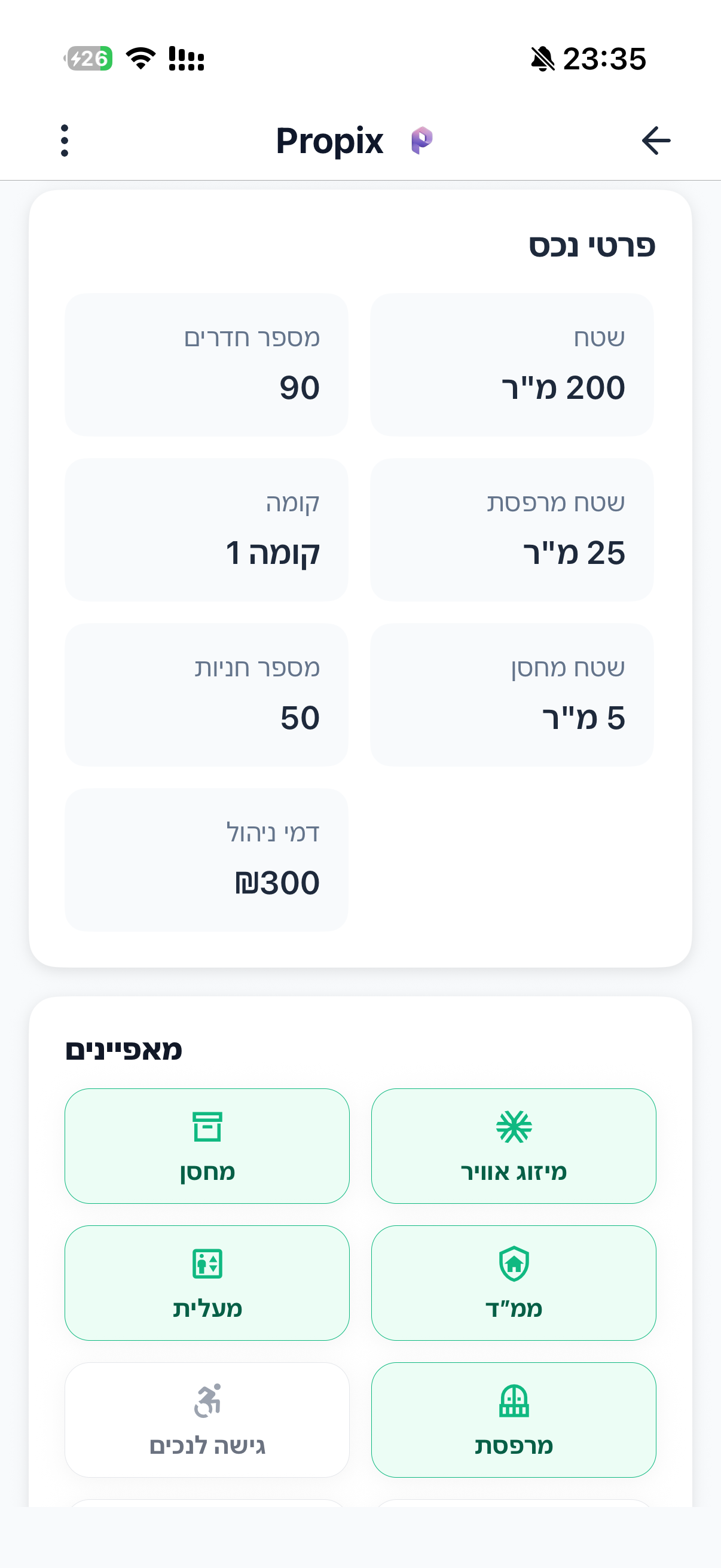
Propix helps you meet these legal requirements effortlessly: automatic, timestamped documentation of maintenance requests, tracking of lease renewal dates and your planned rent increases, and organized deposit management — all in one app, available on iOS and Android.