

How to Choose a Good Tenant – 7 Things to Check Before Signing a Lease
·6 min read
Many landlords pick a tenant based on a good "gut feeling" from a single meeting. That's not enough. A tenant who seems nice and trustworthy in a 20-minute meeting can turn out to have a history of debt, property damage, or chronic late payments.
The consequences can be serious: a year of late payments, disputes over the property's condition, an eviction process that costs money and takes months, and damage not covered by the security deposit. Choosing the right tenant from the start is the single best investment you'll make as a landlord.
Financial and Background Checks
1. Check Financial Capacity
This is the most basic check, yet many skip it out of awkwardness. Don't be shy about asking for documentation. Ask for the last 3 months of pay stubs or proof of income. For self-employed applicants, ask for an accountant's confirmation or an annual income report. The standard rule: rent shouldn't exceed one-third of the tenant's net income.
For example: rent of ₪5,000/month means the tenant should earn at least ₪15,000 net. If the income is borderline, consider requiring an additional guarantor. Also pay attention to the income source: a salaried employee with a stable employer is different from a self-employed person with variable income, even if the average is similar.
2. Check Rental History
Simply ask: "Where did you live before?" and request the previous landlord's contact details. A single 5-minute phone call can reveal essential information. Questions worth asking:
- Were there payment delays? How many times?
- Was the property returned in good condition?
- Would you rent to this tenant again?
A tenant who refuses to provide a previous landlord's contact info is a red flag. A tenant whose previous landlord hesitates to speak positively about them is a double red flag.
3. Check Credit Data
Today you can ask the tenant to provide a credit report from the Bank of Israel. It's a free document anyone can generate for themselves within minutes on the Bank of Israel website. What to look for:
- Negative notes — liens, unpaid debts
- Account irregularities — a restricted or frozen account
- Loan arrears — someone who doesn't pay their bank may not pay you either
A clean report doesn't guarantee a perfect tenant, but a report with negative notes is a clear red flag.
Verifying Identity, Fit, and Living Habits
4. Verify Identity and Status
Make sure the ID presented to you is genuine and matches the person in front of you — name, photo, date of birth. If in doubt, you can scan and compare. If the tenant isn't a citizen of your country, check what their residency status is, when it expires, and whether it covers the entire lease term. A tenant whose residency status expires within 3 months, on a one-year lease, is a problem worth addressing before signing.
5. A Real Getting-to-Know-You Conversation
Beyond the paperwork, talk to the tenant openly. This conversation isn't just for gathering information, but also to understand whether you can work with them for a year or more. Recommended questions:
- How many people will live in the apartment? (names, ages)
- Are there pets?
- What's the reason for leaving the current apartment?
- Any plans to travel abroad for an extended period?
- Will anyone else be paying part of the rent?
Inconsistent answers, avoiding details, or a story that changes between conversations are warning signs. A good tenant isn't afraid of these questions.
6. Visit the Current Apartment (Optional but Useful)
If you want to be especially thorough, ask to visit the tenant's current apartment. The request itself tells a story: if a tenant objects strongly, ask why. A clean, organized apartment in good condition is a good indicator. An apartment with stained walls, broken furniture, and trash in the corners is how your property will look in a year.
7. Check Guarantors
Even if every indicator is positive, ask for a guarantor. A qualified guarantor has stable, provable income and can cover payments if the tenant can't. Make sure to confirm:
- The guarantor signs the lease itself, not a separate document
- The guarantor understands exactly what they're taking on
- The guarantor's details are documented (name, ID, address, phone)
Keep in mind a guarantor is only one of several possible types of security — for the full breakdown of deposits and bank guarantees, and the legal cap on total security, see our guide to rental security deposits and guarantees.
What This Looks Like in Practice
Two candidates apply for the same apartment within a day of each other. The first offers cash up front and asks to sign "today, before someone else takes it." The second asks for a few days to arrange pay stubs and a credit report, and provides their previous landlord's number without being asked. The first candidate's urgency, once checked, turns out to mask a pattern: two previous landlords reachable through a mutual contact describe repeated late payments and a security deposit dispute. The second candidate's documents check out cleanly, and their previous landlord confirms two years of on-time payments and a well-kept apartment. The extra few days of screening cost nothing compared to what the first candidate's history suggested was coming.
Warning Signs Worth Knowing
Beyond the formal checks, a few signs are worth watching for:
- Unusual pressure to sign fast — "sign today, I have someone else waiting" — artificial pressure
- Deposit pushback — a tenant arguing about the deposit amount before even seeing the property
- A history of offenses — a possible check with the tenant's consent
- Someone unwilling to wait — a reliable screening process takes time; if a tenant won't wait for it, ask why
Frequently Asked Questions
How long should proper screening actually take? Most of it, pay stubs, a credit report, and a call to the previous landlord, can be done within two to three days if the tenant is cooperative. Treat resistance to that timeline as information in itself.
Is it reasonable to ask for a guarantor even if income looks solid? Yes. A guarantor isn't an accusation of distrust, it's a standard safety net that costs the tenant nothing if everything goes as planned, and protects you if their circumstances change mid-lease.
What if I'm renting during a competitive season and don't have time for all seven checks? Keep every check, just run them in parallel and set clear criteria in advance so you can screen faster without skipping steps, see our guide to finding a tenant fast during moving season for how to compress the timeline safely.
Summary: Don't Rush
Time pressure is the biggest enemy in choosing a tenant. If the property is vacant and you're under pressure to fill it, you might take an unsuitable candidate. A month of vacancy beats a year with a problematic tenant.
And when you reach the lease stage, make sure the lease actually protects you. A detailed lease is your best protection even if you chose an excellent tenant. If, in the end, everything fails and you end up with a non-paying tenant, you'll know you did everything right from the start, and that you have a clear procedure to follow.
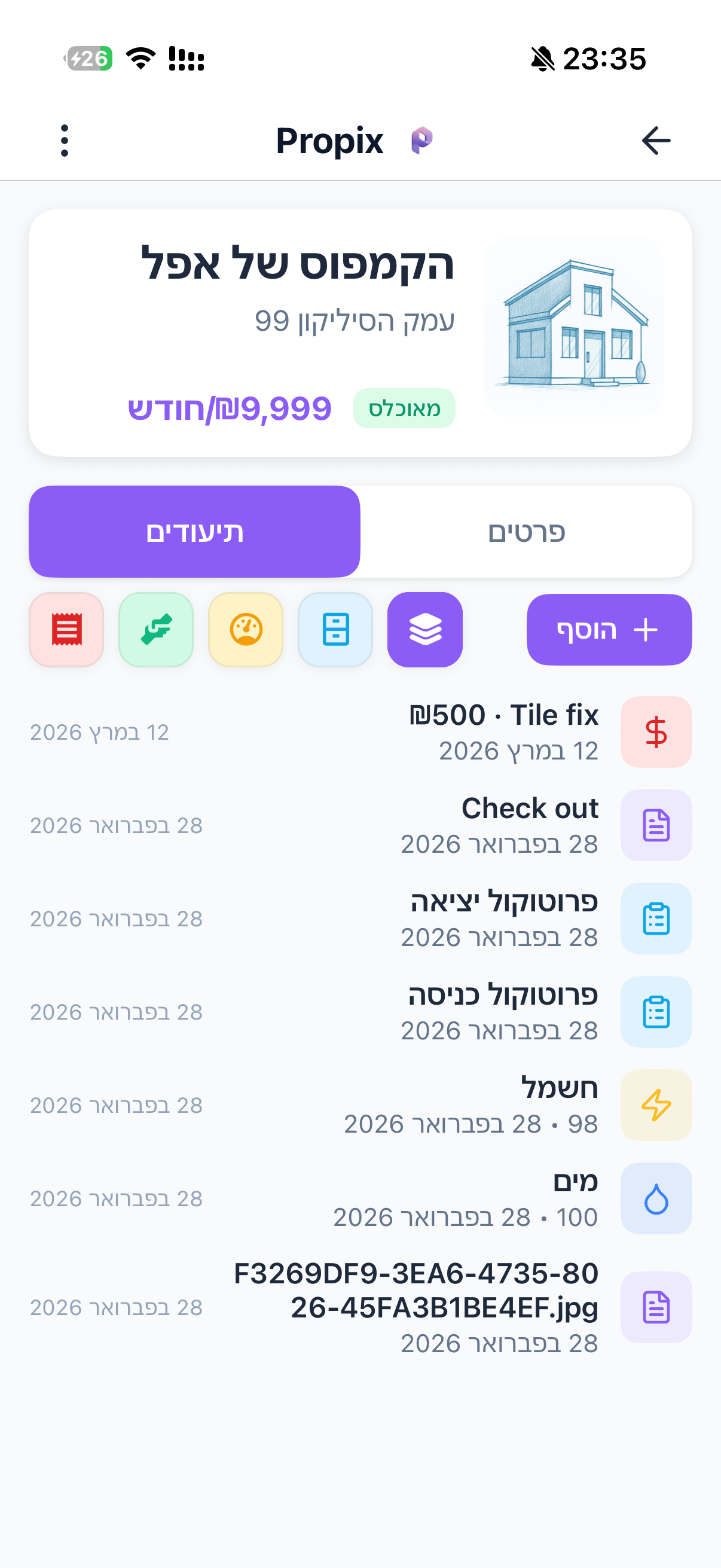
Propix helps you manage the entire new-tenant onboarding process, from storing documents and screening results, through the move-in protocol, to ongoing payment tracking.