
Managing a Rental Property Remotely – A Guide for Owners Living Abroad or in Another City
·5 min read
More and more property owners live or work abroad while holding a rental apartment back home, whether they inherited it, bought it as an investment, or moved abroad after already renting it out. The challenge: every fault, every tenant question, every need to coordinate a contractor happens across a time-zone gap, sometimes while you're asleep.
The Core Problem: Response Time
The Fair Rental Law requires you to fix an urgent fault within 3 days of receiving notice, regardless of where you're physically located. See the full detail in our Fair Rental Law 2026 guide. When you're 7–10 time zones away, "within 3 days" can shrink in practice to a day and a half of real availability. That's why remote management requires a system, not just good intentions.
Step 1: A Local Contact — Not Dependent on You
Before anything else, make sure you have at least one professional on the ground — a plumber, electrician, or general handyman — who can get to the property the same day even without you. Don't rely on "I'll find someone when it happens." Find them in advance, save their details, and even share basic emergency contacts with the tenant.
Step 2: Communication That Doesn't Depend on Your Availability
The worst solution for remote management: asking the tenant to "message me on WhatsApp and I'll reply when I wake up." That works until it doesn't, right during the most urgent fault. It's better to have a system with automatic reminders and organized documentation that doesn't depend on you being awake at that exact moment. For more on this digital management approach, see our original property management guide.
Step 3: Power of Attorney — When It's Necessary
If you expect to be away for an extended period, consider giving a limited power of attorney to someone trustworthy back home (a family member, lawyer, or management company) who can act on your behalf in urgent cases, signing documents, dealing with the building committee, or even representing you with a tenant if needed. This doesn't replace day-to-day management, but it gives you a safety net for edge cases.

Step 4: Insurance and Taxes — Don't Forget While You're Away
Remote management doesn't exempt you from your usual tax and insurance obligations. If you're a non-resident, it's worth checking how that status affects your tax track, see our rental income tax guide. And make sure your insurance policy is up to date too, full detail in our landlord insurance guide.
Step 5: Deciding on a Management Company
If the gap between your needs and your availability is too large, a professional property management company can bridge it, for a fee (typically around 10% of rent, or a fixed monthly rate). This isn't necessarily the only solution: many owners successfully manage remotely with the right digital tools and one good local contact, without giving up a percentage of their income.
A Concrete Scenario
An owner living in New York holds an apartment in Ramat Gan, seven hours behind local time. At 6am local time, a burst pipe under the kitchen sink starts leaking, 11pm the previous night in New York. The tenant photographs the damage and sends it through the app the moment it happens, which automatically time-stamps the report and flags it as urgent. The owner's pre-saved local plumber gets an automatic notification with the tenant's contact and the photo attached, and arrives within two hours, long before the owner wakes up the next morning. By the time the owner checks their phone at 7am New York time, the fault is already fixed, documented with before-and-after photos, and logged against the property's maintenance history, all without a single 3am phone call.
What Can Go Wrong Without a System
- A missed 3-day repair window simply because the message arrived at 4am your time and sat unread for hours, exposing you to a claim even though you would have acted immediately if you'd seen it sooner
- No local contact lined up, so the tenant ends up hiring whoever they can find, at whatever price, with no vetting or price comparison
- Insurance lapses unnoticed because a renewal notice went to an old address or inbox you no longer check regularly
- Tax filing deadlines missed due to unfamiliarity with non-resident reporting requirements, leading to penalties that could have been avoided with a single check-in
Frequently Asked Questions
Do I need power of attorney even for a single property? Not necessarily for routine matters, but it's worth having in place for situations where you can't be reached quickly, such as signing a renewed lease or responding to an urgent building committee vote.
Is a management company always the safer choice for remote owners? Not always. Many remote owners manage successfully with a reliable local tradesperson and a digital system for documentation and communication, keeping the percentage a management company would otherwise take.
How do I handle viewings for a new tenant if I can't be there? A trusted local contact, or the current tenant if the property isn't yet vacant, can often handle in-person viewings, with screening and final decisions still made by you remotely based on documents and a video call.
What's the biggest mistake remote owners make in the first few months? Underestimating how much a time-zone gap compounds small delays. A message that would take an hour to resolve locally can stretch into a full day when it has to wait for you to wake up, which is exactly why a local contact and a documentation system matter more for a remote owner than for someone living five minutes from the property.
Should I visit the property in person periodically, even if everything seems fine remotely? Yes, when it's practical. Photos and reports catch most issues, but an in-person walkthrough once or twice a year can surface slow-developing problems, like early dampness or wear, that are easy to miss from a distance.
What to Remember
Geographic distance doesn't have to mean poor property management. With a local contact, communication that doesn't depend on your availability, and organized tracking, you can manage a property professionally even from the other side of the world.
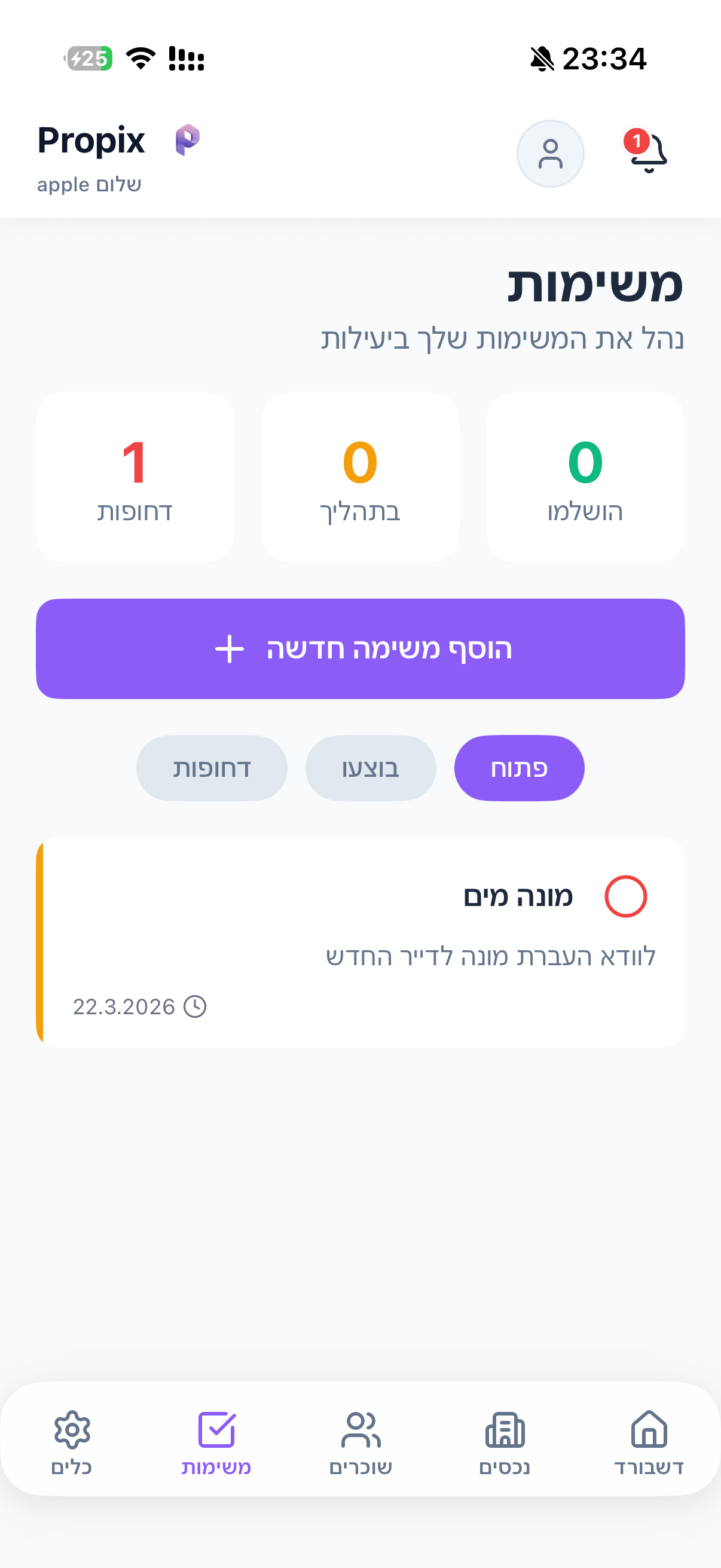
Propix is built for exactly this: every fault, document, and payment is accessible from your phone at any hour and in any time zone, with alerts that don't depend on you being online at that exact moment, so remote management feels like managing from home.